

Getting around Malaga by bicycle

Cycling in Malaga is becoming increasingly popular, with more bicycles appearing on the streets each day as this eco-friendly mode of transport is embraced.
In response, the city council has invested significantly in cycling infrastructure, and Malaga now features 44 kilometres of dedicated cycle lanes throughout the urban area.
That said, visitors from countries with highly developed cycling networks, such as the Netherlands or Belgium, may find Malaga’s infrastructure relatively limited by comparison. Understanding where cycle lanes are concentrated can help cyclists plan safer and more comfortable routes.
Cycling in Malaga city centre
The historic centre offers very little dedicated cycling infrastructure. Only short, fragmented stretches of cycle lane exist, meaning cyclists often need to share space with cars and pedestrians while navigating narrow streets.
This can be challenging, particularly for less confident riders or visitors unfamiliar with the city layout.
In addition, many local drivers are still adapting to sharing the road with cyclists, which can make riding in the old town feel more demanding than in other European cities.
Teatinos: Malaga’s best-connected suburb
The majority of Malaga’s cycle lanes are located to the west of the Guadalmedina river, which divides the city into eastern and western zones.
These western districts are generally the most accessible and comfortable for cyclists of all abilities, thanks to more extensive and continuous infrastructure.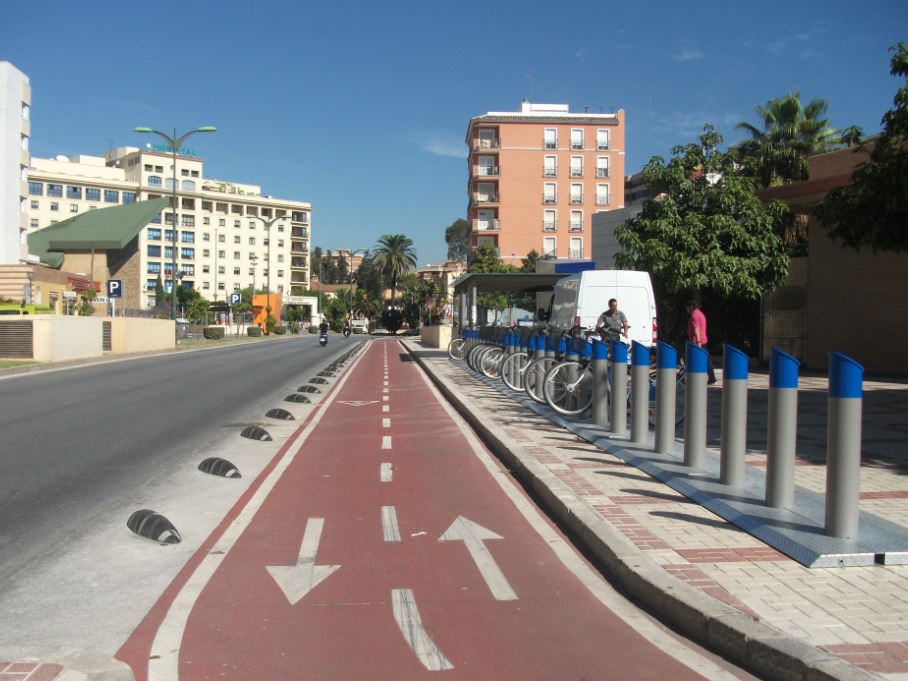
One standout area is Teatinos, a modern residential and university neighbourhood northwest of the city centre. Teatinos has well-maintained cycle lanes that link directly to central Malaga, making it a popular choice for students and residents who cycle to the University of Malaga or commute into the city for work or leisure.
Cycling to El Palo and Pedregalejo
Eastern Malaga has far fewer dedicated cycle lanes than the western districts. Outside the shared pedestrian and cycling path along the seafront, running from La Malagueta to Baños del Carmen, protected infrastructure is scarce.
As a result, cycling in the eastern neighbourhoods can be more difficult for those who prefer segregated routes.
However, traffic levels in and around the city centre are generally moderate, and Malaga features several wide, tree-lined boulevards where cars and bicycles can share road space comfortably.
Practical tips for cycling in Malaga
Confident riders who are comfortable in mixed traffic will find much of central Malaga manageable, particularly outside peak hours when traffic is calmer.
For route planning, consult the official Malaga cycle lane map to identify the safest and most convenient paths.
Whether cycling for leisure or everyday transport, understanding where Malaga’s cycling infrastructure is strongest can help you make informed decisions and enjoy getting around the city by bike more safely.

Daryl is the co-founder of Malaga Guru. He is a copywriter, editor and translator who moved to Malaga over a decade ago, having first fallen in love with the city on his Erasmus year. After working for many years at local expat newspaper SUR in English, Daryl gained expert knowledge in life from the perspective of foreign residents and decided to co-found this site in 2016.