

The Malaga Easter tradition that frees a prisoner every Holy Week
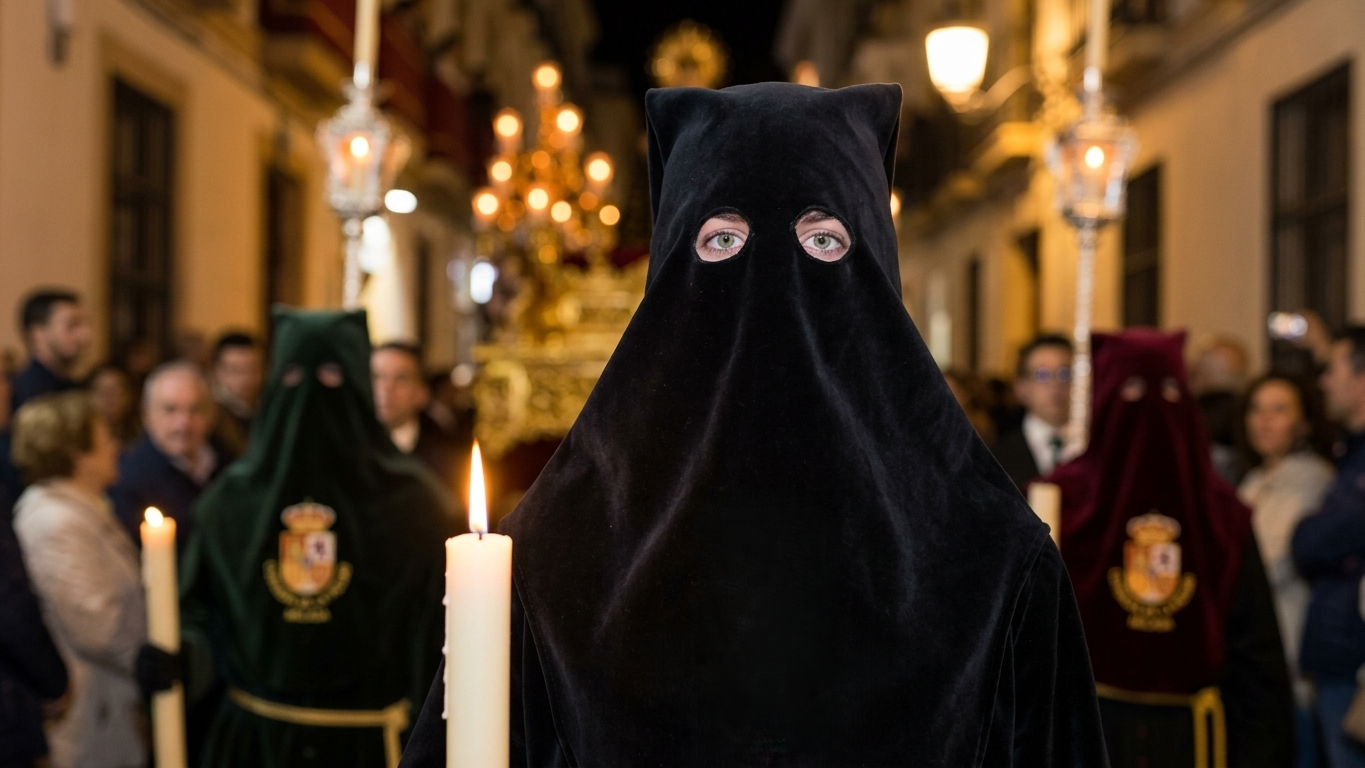
Every Holy Wednesday during Malaga’s famous Semana Santa, something remarkable happens that most tourists witnessing the processions know nothing about.
As tens of thousands of visitors photograph the elaborate floats and hooded penitents winding through the city streets, one prisoner is walking out of jail early.
It sounds like fiction, but this almost 300-year-old tradition is very real and uniquely Malagueño.
The centuries-old Malaga prison release during Semana Santa
The story begins in 1759 during the reign of Spain’s King Carlos III, when a devastating plague epidemic swept through Malaga.
The situation was so dire that the king suspended all Holy Week processions. The decision that particularly upset the prisoners devoted to the brotherhood of Jesús El Rico.
These inmates asked their warden for permission to conduct their own procession, bearing the statue of Christ on their shoulders through the city streets. The warden, unsurprisingly, refused to let convicted criminals out of prison for a religious parade.
So the prisoners mutinied, left the jail anyway and carried the sacred trono (throne or float) through Malaga in what became the longest procession in the city’s history. When they finished, every single prisoner voluntarily returned to their cells.
Days later, the plague epidemic receded. Many considered it a miracle at the time.
Carlos III responded by releasing one prisoner that year, and the tradition has continued every Holy Wednesday since 1751 except during the Spanish Civil War.
How does the Malaga Holy Week prisoner release work?
Jesús El Rico is the only church brotherhood (cofradía) in all of Spain that holds this extraordinary privilege, granted by royal decree and later ratified by King Juan Carlos I after Spain’s return to democracy.
The process is surprisingly bureaucratic for something so steeped in tradition. The brotherhood sends a letter to the Spanish Ministry of Justice requesting a pardon, but they cannot propose anyone specific. Instead, the prison institution and the Provincial Court of Malaga select three candidates with “the right profile” for consideration.
These are typically inmates with good behaviour, convicted of non-serious crimes and whose cases don’t have significant social repercussions. The aim is to promote reintegration into society rather than simply rewarding religious devotion.
A psychosocial team from the prison assesses each candidate to ensure they have family connections, community ties and a realistic chance of staying out of trouble after release.
The Ministry of Justice receives the three names, and the cabinet decides which prisoner to free, announcing the decision at the final Council of Ministers meeting before the Easter break.
What crimes have been pardoned during Malaga’s Semana Santa?
In recent years, the pardoned prisoners have typically been serving sentences for crimes like drug trafficking or theft.
However, given that this tradition spans almost three centuries, the president of the Jesús El Rico brotherhood, Ramón Varea, acknowledges that more serious offenders, including those convicted of murder or rape, have almost certainly been released at some point in history.
The selection criteria have likely evolved considerably since the 18th century, when notions of justice and rehabilitation differed markedly from modern standards.
What’s remarkable is the success rate of this programme. According to Varea: “Practically all of the inmates who have been released from prison by Jesús El Rico never carry out any other crime. We have to understand that we are humans and we can make mistakes.”
The freed prisoners often participate in the Jesús El Rico procession immediately after their release, walking through Malaga’s streets in the brotherhood’s traditional black tunic.
For many, this public participation in Semana Santa becomes a powerful symbol of their second chance and their gratitude to the brotherhood that petitioned for their freedom.
A time for redemption
If you’re visiting Malaga during Holy Week, you’re witnessing one of Andalucía’s most spectacular cultural events with around 40 different brotherhoods processing through the city over seven days.
The Jesús El Rico procession on Holy Wednesday carries additional weight when you understand that somewhere in that crowd of penitents might be someone who was behind bars just hours earlier.
It’s a tradition that speaks to the Spanish approach to Semana Santa as a time of redemption, forgiveness and fresh starts rather than simply religious pageantry.
Whether you find the tradition inspiring or troubling probably depends on your perspective on justice, rehabilitation and the role of centuries-old customs in modern society.
The debate continues in Spain itself, with some praising the focus on reintegration. In contrast, others question whether serious offenders should receive preferential treatment based on a tradition dating back to a plague epidemic.
For expats settling in Malaga, this is one of those cultural peculiarities that reminds you you’re living somewhere with deep historical roots and a sometimes surprising approach to blending the sacred and the secular.
And for the prisoners selected each year, it’s a literally life-changing intervention that cuts months or even years off their sentences and gives them a chance to rebuild their lives in time for Easter.

Daryl is the co-founder of Malaga Guru. He is a copywriter, editor and translator who moved to Malaga over a decade ago, having first fallen in love with the city on his Erasmus year. After working for many years at local expat newspaper SUR in English, Daryl gained expert knowledge in life from the perspective of foreign residents and decided to co-found this site in 2016.